

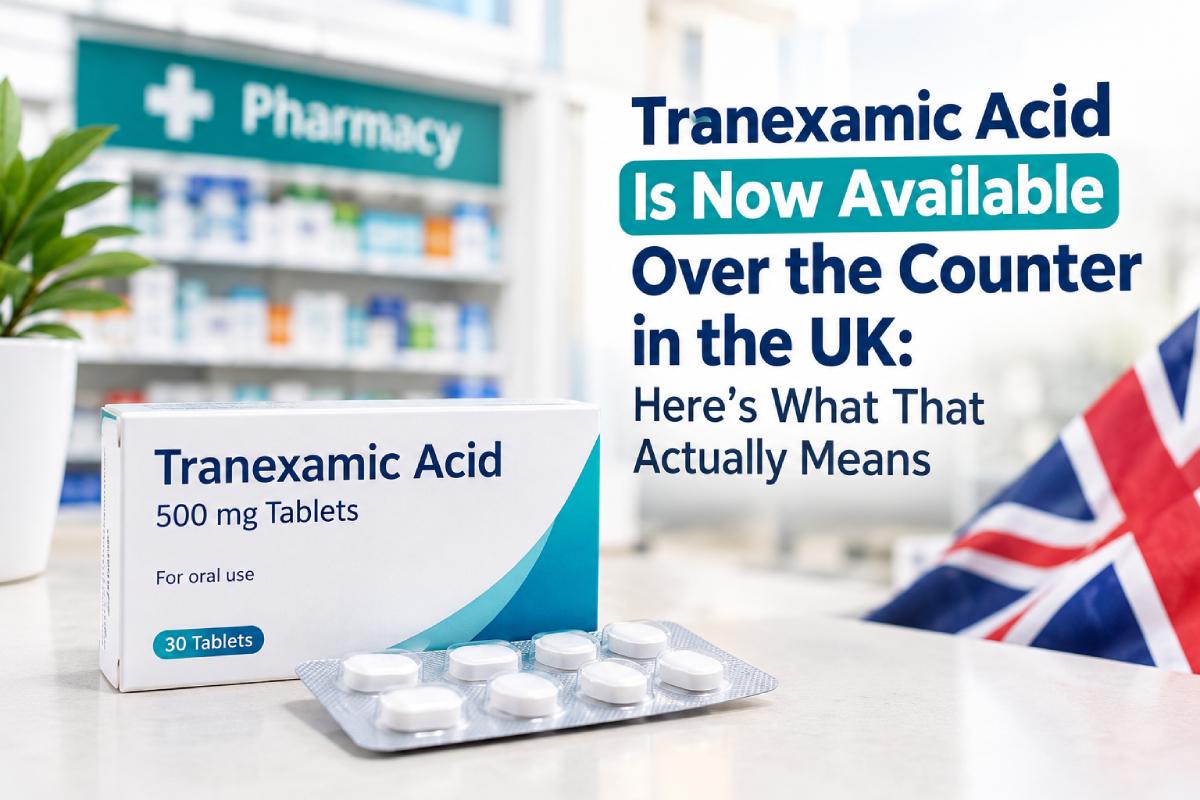
For a long time, tranexamic acid sat firmly in the ‘prescription only’ category in the UK, which meant that anyone dealing with heavy periods had to first get through a GP appointment, explain their symptoms, hope the doctor took them seriously, and then wait for the prescription to come through. That’s a lot of steps when you’re bleeding through clothing at work and just need something that works. Things have changed, and it’s genuinely significant.
Tranexamic acid has been used for decades to reduce heavy menstrual bleeding. It doesn’t affect your hormones, which is one of the reasons it suits a lot of people who can’t or don’t want to use hormonal contraceptives for period management. It works by helping blood clot more effectively, which sounds alarming when you first read it but is actually a well-understood mechanism that’s been studied extensively in this context. Doctors have been prescribing it routinely for years.
The shift to allowing it to be sold without a prescription reflects a growing recognition that heavy periods aren’t some niche medical complaint requiring gatekeeping. Around a third of women report that their periods significantly affect their daily life, which, if you sit with that figure for a moment, is a lot of people managing a lot of unnecessary disruption.
What the Over the Counter Option Actually Gives You
Access, mainly. Not having to book a GP appointment to manage something you experience every month is genuinely useful, especially with surgery waiting times still stretched across most of England and Wales. You can now buy over the counter tranexamic acid through regulated channels, which means there’s still a proper process involved, it’s just one you can do without a referral.
Products like Evana have gone through the necessary regulatory process to be sold this way in the UK. They’re not unregulated supplements or herbal alternatives. The active ingredient is the same one that would have been on a GP prescription, just now accessible through a different route. That distinction matters if you’re weighing up whether this is a legitimate option or something to be sceptical about.
You’ll typically go through a short consultation or questionnaire when buying it, which is there to make sure it’s appropriate for you. Certain conditions do affect whether tranexamic acid is suitable, so that screening step isn’t bureaucratic box-ticking, it serves an actual purpose.
Who It’s Likely to Help
Anyone whose periods are heavy enough to interfere with their normal routine, and who hasn’t been able to get a satisfactory solution through their GP, is probably the main audience here. That might mean people who’ve been told it’s normal when it really isn’t, or people who’ve tried hormonal options and found they don’t work for them. It might also mean people who just want to deal with the problem quickly without going through the whole medical referral process from scratch again.
Tranexamic acid is taken during your period rather than throughout the whole month, which appeals to people who are wary of taking medication continuously. You use it when you need it and stop when you don’t. For some people, that’s preferable to a daily pill or a hormonal IUD, even if those options work well for others.
It won’t work for everyone. If heavy bleeding is being caused by something like fibroids or endometriosis, tranexamic acid might reduce the bleeding but won’t address the underlying issue, and that’s worth knowing before you start. It’s also not a contraceptive. These are the kinds of things that are worth reading through carefully before purchasing, rather than treating it like picking up paracetamol.
A Small but Genuine Shift in How Women Access Healthcare
There’s been a lot of conversation in the UK over the past few years about how women’s pain and health concerns have historically been dismissed or deprioritised. The move to allow tranexamic acid over the counter doesn’t fix all of that, obviously, but it does remove at least one fairly significant barrier to managing something that affects a huge number of people every single month.
It’s a practical development rather than a revolutionary one. But for someone who’s been struggling to get taken seriously at a GP surgery while simultaneously trying to get through a normal working day, practical can be exactly what’s needed.
